
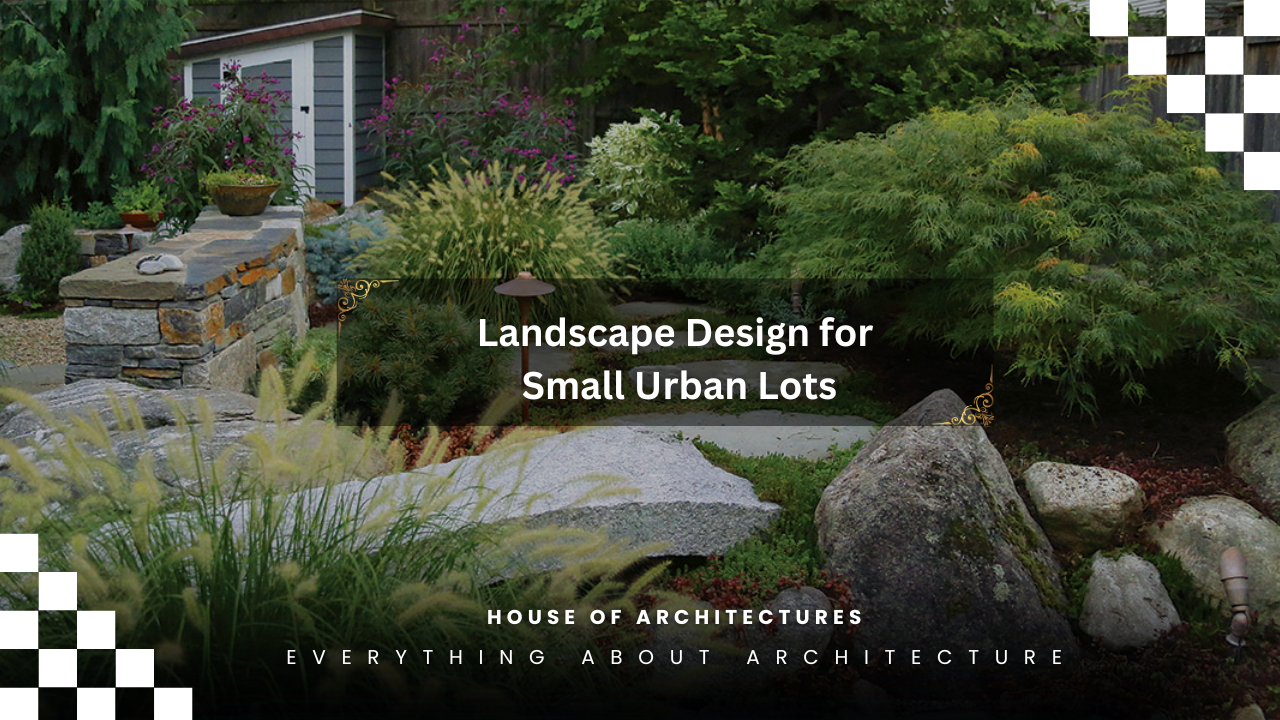
Most of my projects start with the same conversation. A homeowner walks me through a narrow lot in Montreal’s Plateau or Villeray, points at a rectangle of patchy grass bordered by a fence on three sides, and says something like: “I know it’s small, but can we do anything with it?”
The answer is always yes. But it takes a different way of thinking than what works on a suburban half-acre.
Stop Trying to Fit Everything on the Ground
The single biggest mistake I see on small lots is treating the ground as the only usable surface. It’s not. Walls, fences, overhead structures, even the sides of a shed can hold planters, climbing vines, or mounted herb boxes.
Vertical planting isn’t just a trend. On a 20-by-25-foot lot, going vertical is how you get the greenery of a space three times that size. A cedar trellis against a south-facing wall can support jasmine, clematis, or climbing hydrangea without eating a single square foot of floor area. I’ve built living walls using modular pocket systems that turned a blank garage side into a full herb garden. The homeowner uses it every night when she cooks.
Angle Your Layout Away from the House
Here’s a trick that changed how I design tight spaces. Instead of running your patio or garden beds parallel to the house walls, rotate the layout 45 degrees. This does two things: it breaks the boxy feeling that mirrors the lot shape, and it forces the eye toward the longest diagonal view.
On a recent project in Rosemont, the lot was barely 22 feet wide. By setting the paver patio on an angle and placing a tall ornamental grass cluster at the far corner, the yard felt open in a way that a straight layout never could. Diagonal lines create the illusion of depth. It’s a simple geometry trick, but it works every time.
Give Each Zone a Job
Small doesn’t mean single-purpose. I like breaking a compact yard into two or three distinct zones, each with a clear function. Maybe a dining area close to the back door, a seating nook tucked behind a raised planter, and a strip of pollinator-friendly perennials along the fence line.
The zones don’t need walls between them. A change in ground material does the job. Transition from poured concrete to pea gravel to natural stone, and suddenly it feels like you’re moving through different rooms. The variety tricks your brain into reading the space as larger than it is.
Pick Plants That Pull Their Weight
On a big property, you can afford to plant something that only looks good for two weeks in June. On a small lot, every plant needs to earn its spot. I lean toward species that offer multi-season interest: serviceberry for spring blooms, summer berries, and fall color. Ornamental grasses that stay structural through winter. Boxwood or yew for year-round green structure.
Native species are a practical choice too, especially in Quebec’s climate. They handle freeze-thaw cycles without babysitting, and they support local pollinators. Less maintenance, more resilience.
Don’t Overlook Lighting
A small yard that disappears after sunset is a waste of half its potential. Low-voltage path lights, a couple of uplights on a feature tree, or string lights over a seating area can double the hours you actually use the space. Lighting also adds perceived depth at night, which makes tight lots feel more generous.
The Real Constraint Isn’t Size
After years of working on Montreal’s compact urban lots at Montreal Paysagement Pro (https://www.montrealpaysagementpro.com/), I’ve learned that the real constraint is rarely square footage. It’s imagination. A 400-square-foot backyard with thoughtful design will get more use and bring more joy than a sprawling lawn that nobody planned.
Start with how you want to live in the space. Work backward from there. The lot will surprise you.